Costa Rica has many places with the ideal climate for growing coffee and cocoa. While coffee often has only one harvest per year, cocoa is grown year-round.
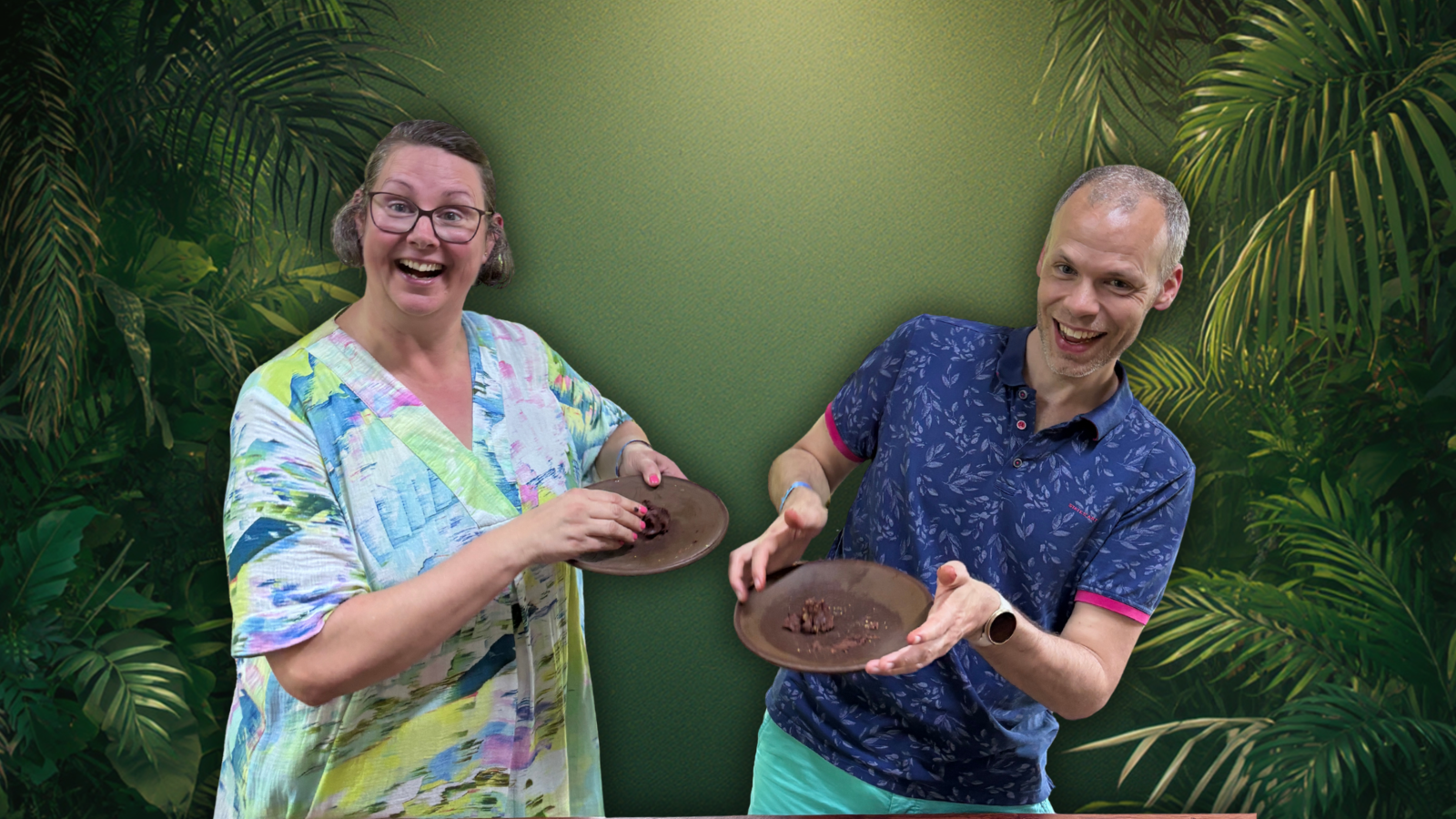
As chocolate lovers, we already know a lot about making chocolate, but we haven’t yet seen the natural environment. Based on positive recommendations, we opt for the Don Juan tour. A guided tour through their garden with cocoa and many other fruit varieties. We actually have a private tour. It is low season here, so our group is complete with just the two of us, which is very nice. The coffee part wasn’t that impressive and didn’t make much of an impression on us.
We take few photos because we are happily chatting with our guide. The chocolate making part of the tour isn’t special to us, because it is aimed at entertaining tourists rather than making good chocolate, in our opinion. If you are not yet familiar with coffee and chocolate, the tour is certainly fun to do.
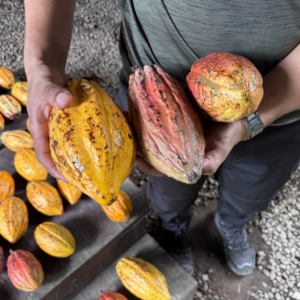
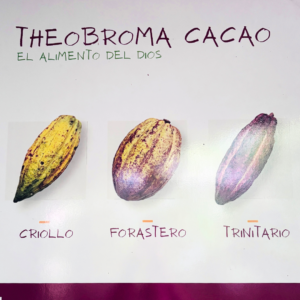
There are 3 types of cacao in this garden. It is not entirely clear to us whether these are the only types of cacao in the world. Our guide works here for 2 years and knows enough to tell us about the tour, but not all our additional questions can always be answered, which is fine.
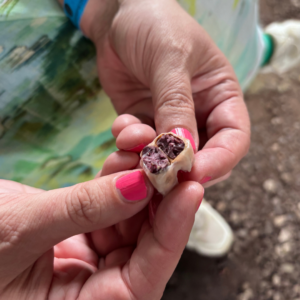
When you detach the large fruit, you find seeds packed in pulp—a slimy layer—from which delicious Kumasi drink is made in the Netherlands. Here, they do not remove the slimy layer. Part of it remains around the cocoa bean during fermentation.
At this company, they have three phases of fermentation. The cocoa beans are placed in a container covered with banana leaves for two days. After this, they are transferred to a subsequent container for days 3 and 4, covered with banana leaves. Then they are thrown into container 3 for days 5, 6, and 7. After that, fermentation is complete, and the beans are dried. This takes place outdoors for four weeks, after which they are roasted. Only then is the cocoa bean ready to be further processed into chocolate. A fresh cocoa bean is a beautiful purple on the inside, as you can see. The pulp, the slimy layer, resembles a lychee, only slightly more acidic and fresher.
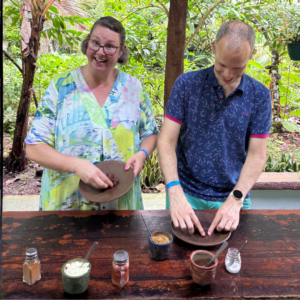
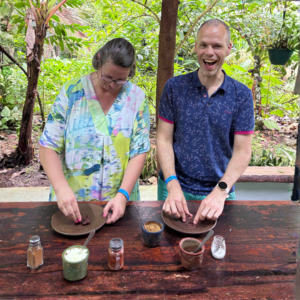
After the bean has been roasted and the last shell removed, you can grind the bean. This happens right before our eyes with a number of roasted cocoa beans. After which we receive the result and make our own chocolate from it.
The cocoa bean contains approximately 1/3 cocoa mass and 2/3 cocoa butter. Here, these are not separated. If you combine milk, sugar, and cocoa, you have chocolate according to official guidelines.
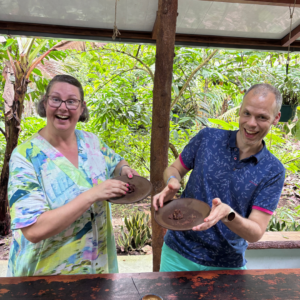
We were given the choice to add milk powder, cane sugar, chili herbs, vanilla, salt or cinnamon, according to our own taste. Arjan’s bar is with vanilla, on the sweet side. Judith’s bar gets a little more sugar with chili, which creates a little layering. We’ll find out at home. Because the chocolate bar can be left in the refrigerator for another 10 minutes for crystallization.
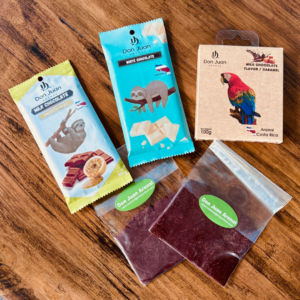
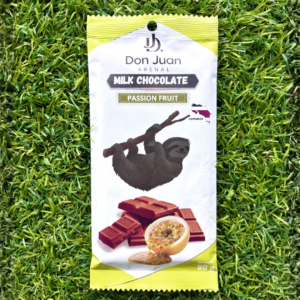
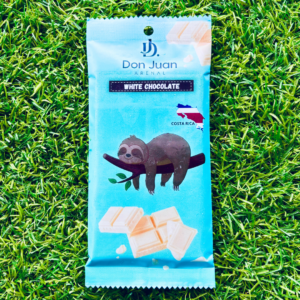
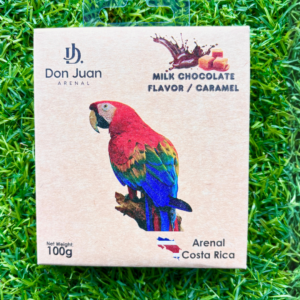
The packaging is beautiful. And of course, we are taking some more home to taste. A white chocolate, a milk chocolate with caramel flavor, and a milk chocolate with passion fruit.
Pura Vida!
Reply