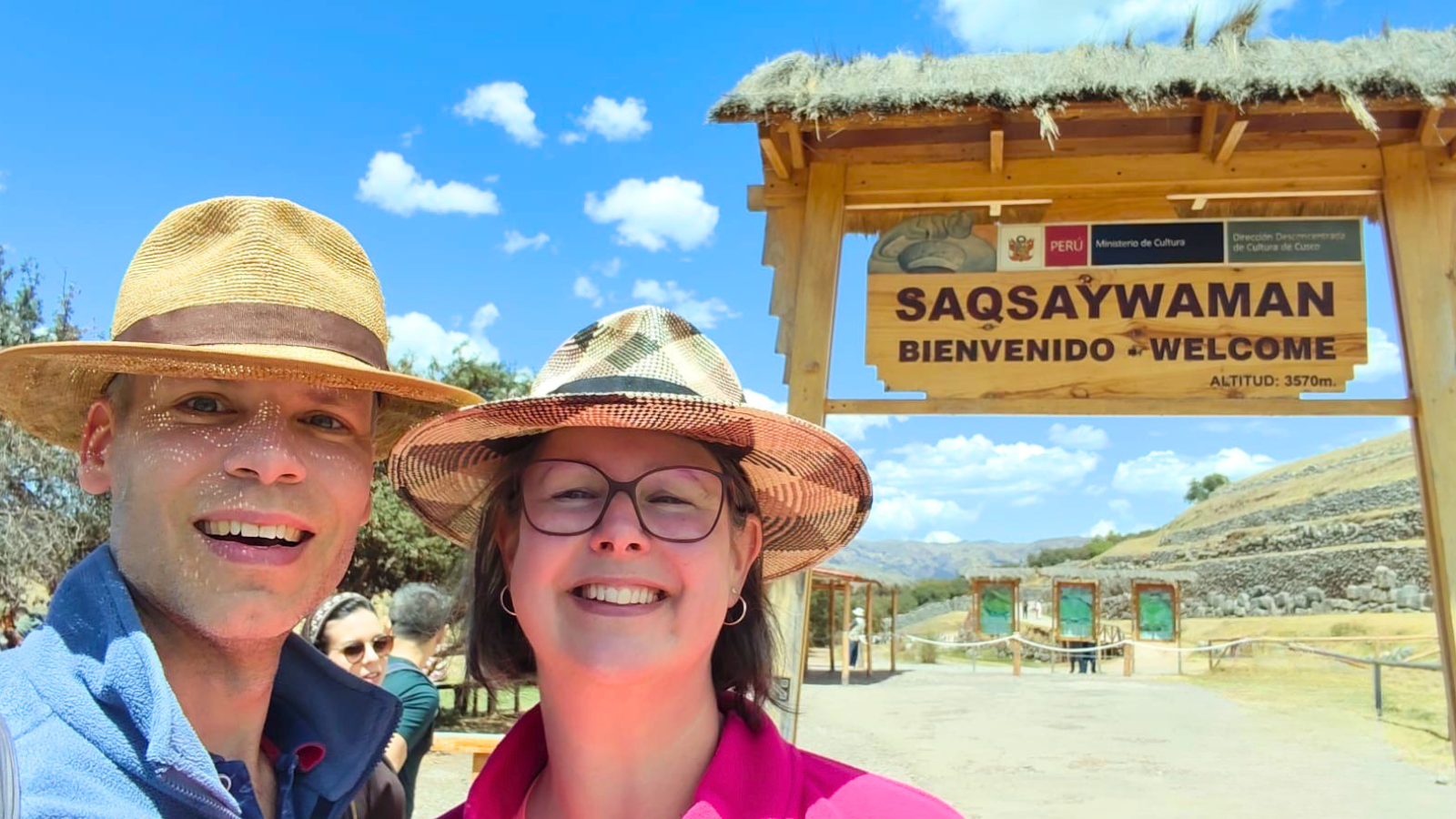
Peru is a country with a rich history. We set out to explore the Inca era. You encounter sites dating back to the Inca period all across the country; some are historic landmarks transformed into tourist attractions, such as Machu Picchu, while others are integrated into the landscape and still used by local inhabitants. In other locations, archaeologists are still conducting research. It is impossible to visit Peru without encountering the legacy of the Incas.
However, the Incas ruled Peru for only a relatively short period (1438–1519). Long before them, there were already thriving communities possessing extensive knowledge of astronomy, agriculture, and the management of natural water sources. Some of these pre-Inca cultures still exist in the country today. They are gradually receiving more attention as tour guides share their stories; if you ask about them, fascinating tales come to light.
Cusco was the capital of the Inca Empire and had a population of one million prior to the Spanish conquest; today, it has 450,000 inhabitants. At its peak, the Inca Empire spanned from Ecuador, Peru, Colombia, Argentina, and Bolivia down to Chile, with a population of 10 to 14 million. Within 120 years, the Inca population had dwindled to just 10% of its original size. Eighty percent of the Incas perished due to diseases introduced by the Spanish, such as smallpox, measles, influenza, typhus, and mumps. The remaining 10% were killed in combat or slaughtered by the Spanish, who employed highly calculated methods to achieve this; in their drive to exterminate the Incas, the Spanish systematically killed those possessing knowledge and destroyed buildings.
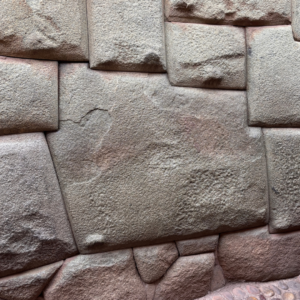
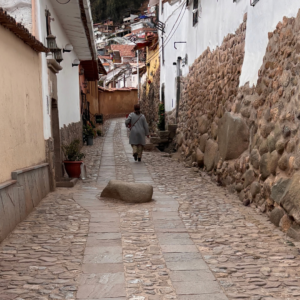
The Stone of Twelve Angles is located in an alley in Cusco. And in the San Blas district, situated slightly higher up in the city, you suddenly come across a section of the mountainside that could not be bypassed.
There were fourteen Inca emperors, with succession based on bloodlines; each emperor would evaluate all his sons, and only the best among them would become the next Inca emperor. This system fostered rivalry between brothers—a situation the Spaniards exploited by pitting the final brothers against one another, thereby avoiding the need to fight the battles themselves.
The Inca faith involved the worship of the sun and the moon—representing the male and female principles—as well as the veneration of natural forces such as water and the alignment of the stars; they also recognized three sacred spiritual animals.
- De condor, Hanan Pacha, de boodschapper tussen de hemel en de aarde, de koning van de lucht. Die verbonden is met de god van de zon.
- De puma, Kay Pacha, staat voor het aardse rijk, het leven in het hier en nu. Een model voor hoe het dagelijkse leven mag zijn: sterk, wendbaar en moedig in dit leven. De Inca stad Cusco is herbouwd in de vorm van een puma, wat staat voor bescherming en kracht.
- De slang, Uchu Pacha, die staat voor de onderwereld. Diep, verborgen belichaamt het wijsheid, vernieuwing en alles wat geworteld was in de aarde en de vruchtbaarheid. De gids van de mysteries naar het hiernamaals, de voorouders, de dood en de wedergeboorte.
Vanaf het plein Plaza de Armas, midden in Cusco, zijn in diverse richtingen tempels gebouwd om de goden te vereren. Toen de Spanjaarden kwamen, hebben ze alle gebouwen afgebroken en op de fundatie christelijke kerken gebouwd. Als je nu op het plein staat zie je allemaal christelijke kerken.
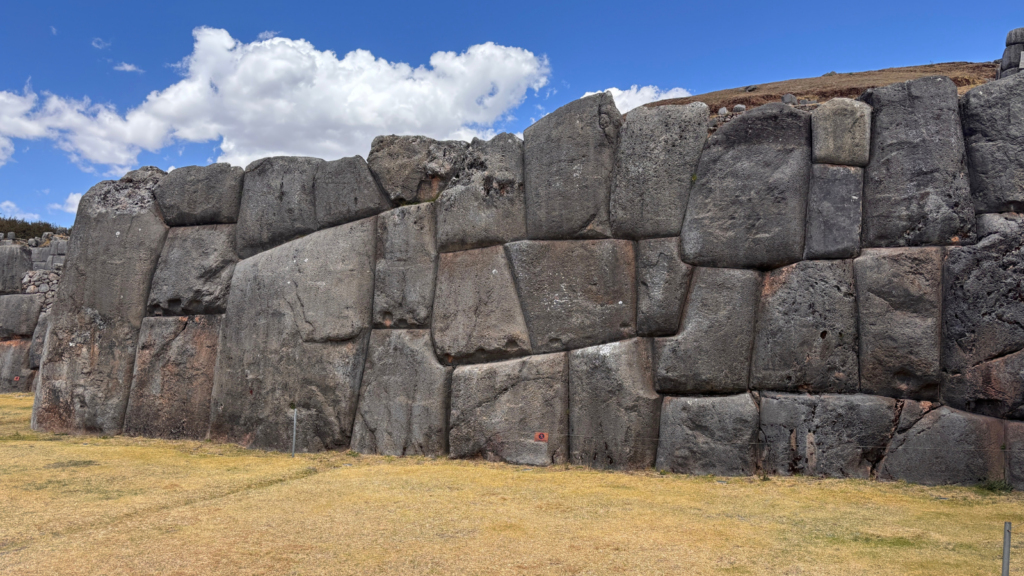
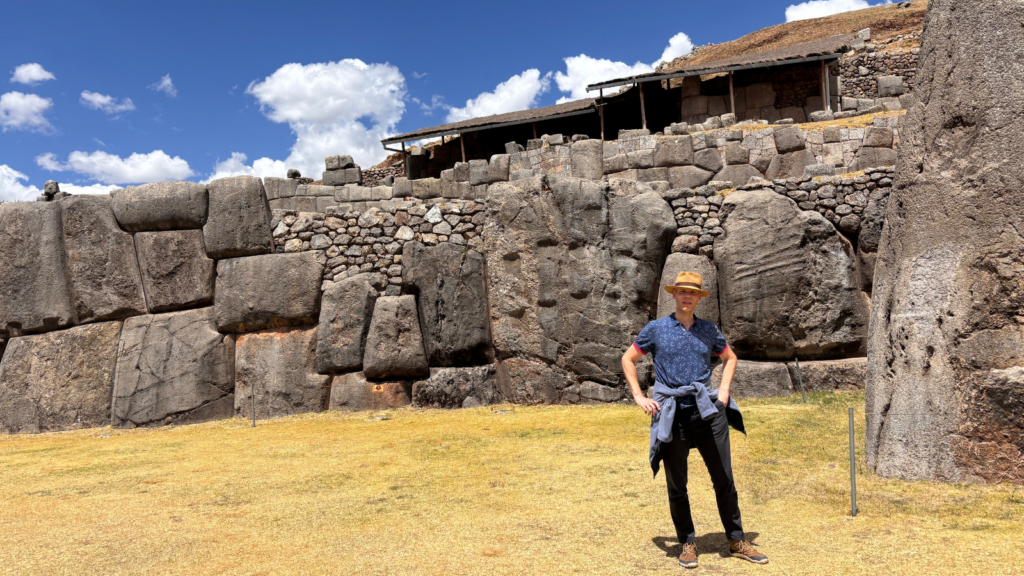
I give special attention to the 9th Inca king, Pachacuti. He greatly expanded the Inca empire and redesigned Cusco. Many buildings and a road network were built during his reign. Of which you can now visit the ruins. In 1650 and 1950 there were major earthquakes in Cusco, destroying many Spanish colonial buildings. The churches have survived because they were built on an Inca foundation.
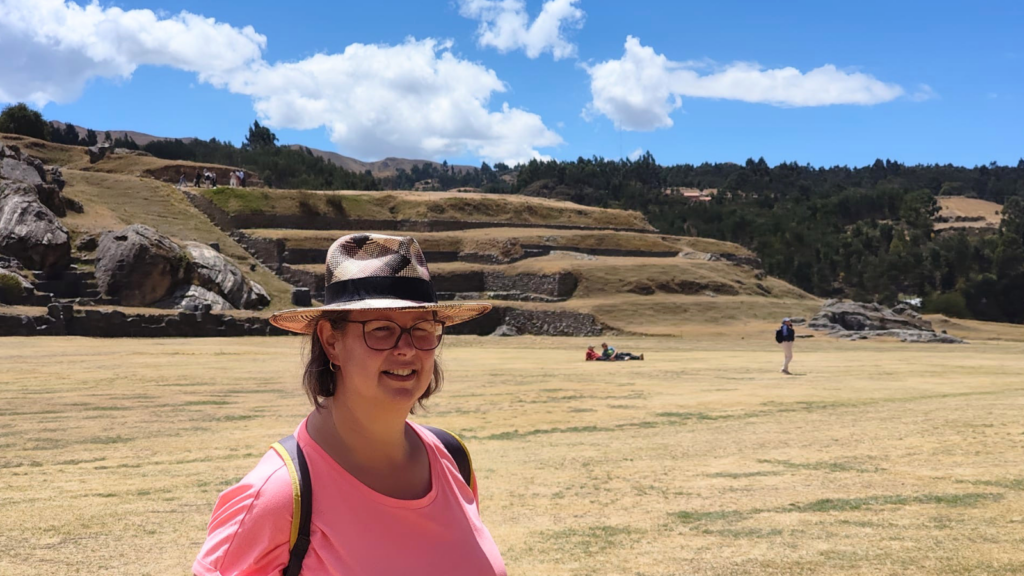
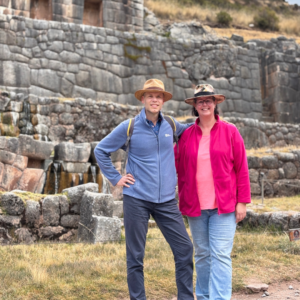
Pachacuti also had Machu Picchu built. A beautiful village between mountains, so you are protected from enemies. The Spanish did not find Machu Picchu, so the city remained ‘complete’. The local population has always continued to use part of the terraces to grow vegetables. Then in 1911 Hiram Bingham ‘discovered’ Machu Picchu. He saw the value of the city and put Machu Picchu on the map. After the ‘discovery’ he burned down all the overgrown terraces, losing a lot of information. Think of all the materials that burn in a fire and can never be recovered: looms, chains with seed beads, etc. Saqsaywamán just above Cusco impressed me slightly more than Machu Picchu. For Arjan, Machu Picchu is at the top.
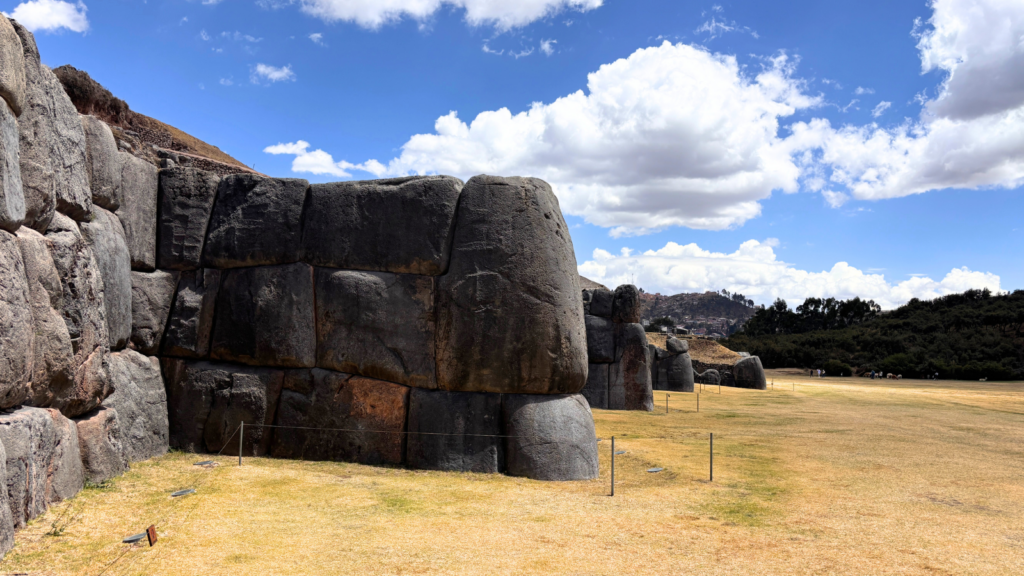

The Incas gathered knowledge about the land, nature, and techniques from the peoples already inhabiting Peru, using it to create magnificent structures. Thanks to their understanding of earthquakes and elements such as water management, various terraces and buildings still stand across the country today, and natural waterways remain in use—features clearly visible in the beautiful village of Ollantaytambo.
In Inca architecture, the base stones are large and fitted together like a puzzle. Each stone was ground using sand, water, and hematite to ensure a perfect fit with the stones beside and beneath it; no mortar was used to bind them together. The outer walls were built with a slight inward slope to ensure stability during earthquakes. They also possessed extensive knowledge of astronomy and the Earth’s annual cycle; in several buildings, sunlight streams through a window on specific dates—such as June 21 and December 21—while in the Temple of the Sun, the light creates the shadow of a puma. These structures represent a truly ingenious synthesis of knowledge.
The Incas lived in rhythm with the earth, following a calendar year of 13 months—corresponding to the 13 lunar cycles per year—with June 21st marking the start of the new year. This date signaled the beginning of winter and the rainy season, while December 21st marked the start of summer and the dry season. They determined this using tablets featuring illustrations of the months and the activities performed during them, such as sowing or harvesting. It is remarkable that they possessed and fully utilized this knowledge. Naturally, the Spanish dismantled this system and introduced the Christian calendar—the same one we use today. However, outside the major cities, one can still observe many customs linked to lunar phases. Certain events have been aligned with Christian holy days, allowing them to observe both ancient and Christian rituals. In Cusco, the Festival of the Sun, Inti Raymi, is celebrated on June 24th.

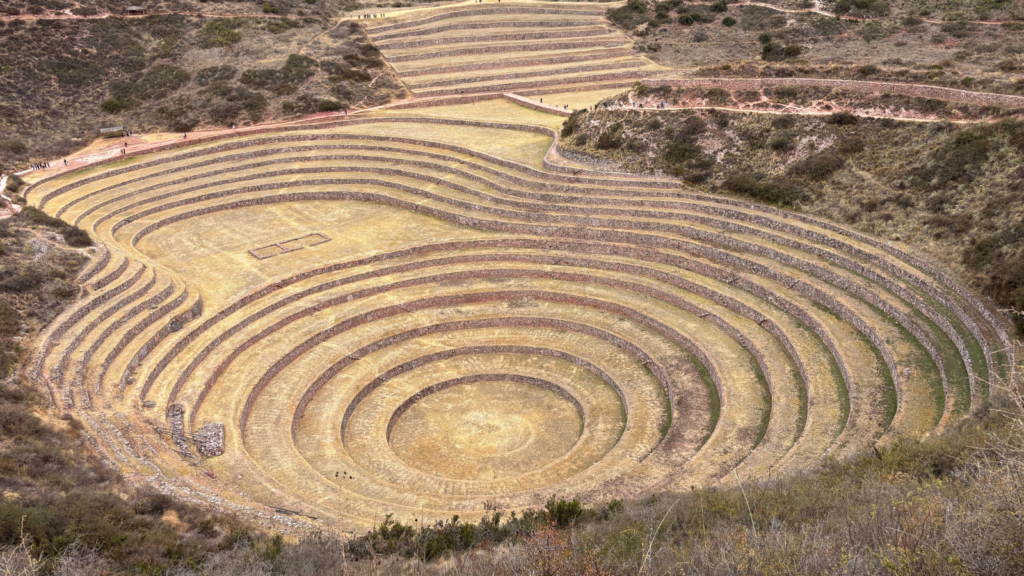
I am deeply impressed by the knowledge possessed by the peoples living before and during the Inca era. It seems as though they had a profound understanding of the earth, earthquakes, the location of hidden mountain water sources, and the optimal altitudes for growing specific crops. They conducted extensive research, yet they lacked the wheel, paper, or a writing system. Much of the information was transmitted through weaving and necklaces, where the beads—made of seeds or other materials—served as a form of communication. This was the responsibility of a single woman in each community. It has been discovered that women played significant religious, economic, and political roles during the Inca era. Although we do not see direct evidence of this during our travels, inquiries with various guides have yielded fascinating insights into the status of women in that period. On our final evening in Puno, a guide told us about two discovered mummies: one male, associated with gold (the sun), and one female, associated with silver (the moon). Dating from the pre-Inca era, this serves as an example of gender equality.
The world focuses heavily on the Incas and Machu Picchu, yet I am far more curious about the pre-Inca peoples and their knowledge and skills. To my mind, the Inca emperors were quite the rascals. I hope that, in the coming years, tourism will open up to highlight indigenous peoples as well—after all, from whom did the Incas acquire their knowledge?
P.S. We hear there are people living in Peru who are unaware of Machu Picchu’s existence. What does that say about modern society?
Reply