
Ollantaytambo was the most delightful town we visited during our trip to Peru. Located in the Sacred Valley, it sits at the same altitude as Cusco. It is a small town with a population of around 3,000.
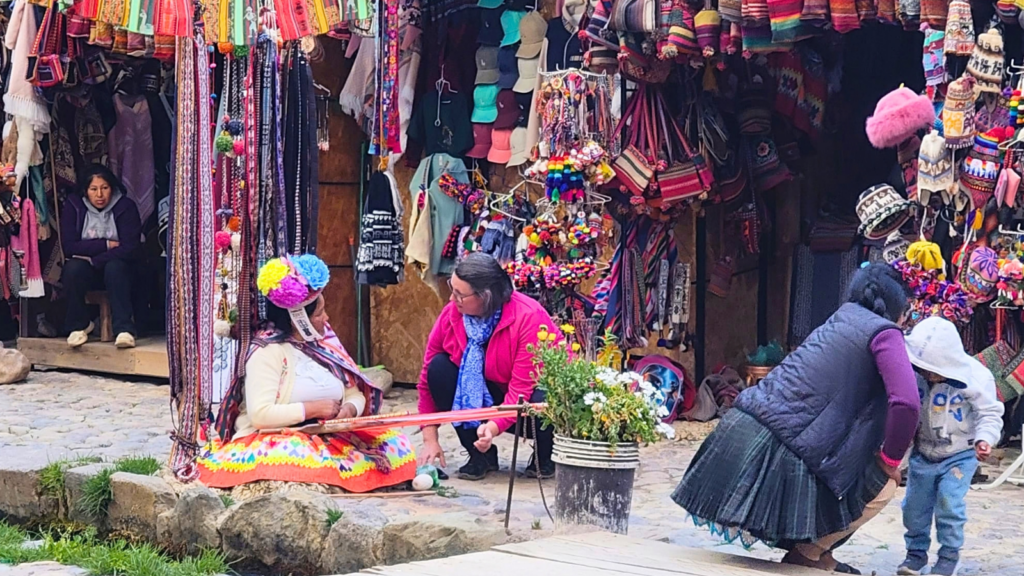
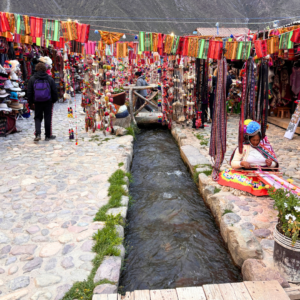
During the reign of the ninth Inca emperor, Pachacuti, Ollantaytambo was conquered, destroyed, and subsequently rebuilt. The emperor reconstructed the town, built terraces, and expanded irrigation systems throughout the Urubamba Valley. These irrigation works are a magnificent sight and remain completely intact. I find it ingenious that, back in the 15th century, people already possessed such knowledge of the natural landscape and the location of water sources—understanding how to harness them effectively. The system was so well constructed that it is still in use today; water flows throughout the entire town. It is truly beautiful.
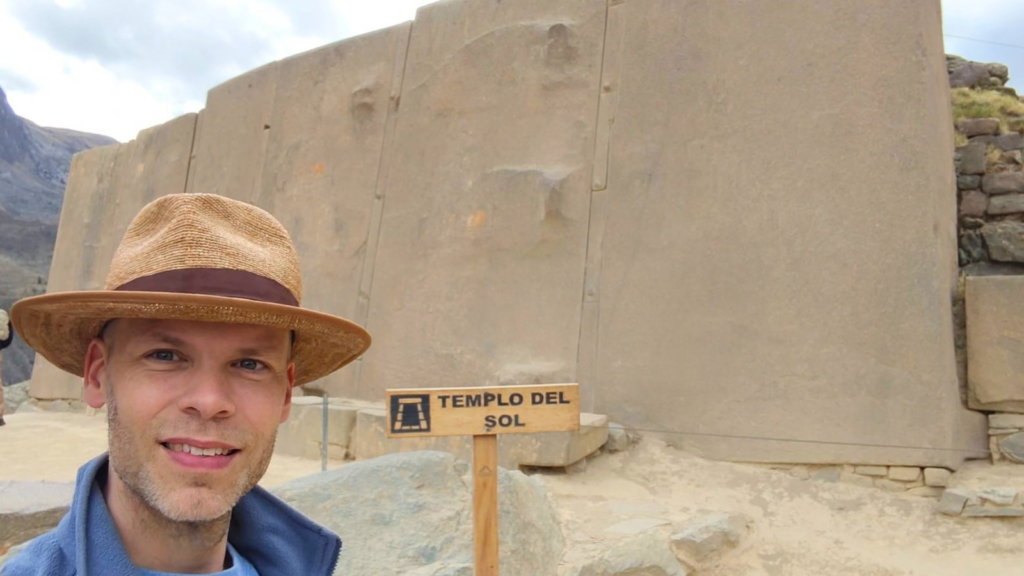
Atop the mountain, near the Temple of the Sun God, stands a wall of six monoliths. On June 21st, the sun aligns in such a way that it casts a shadow revealing the shape of a puma. The puma is one of the three sacred animals of the Inca era, symbolizing a connection to nature and the power derived from it. The condor serves as the connector and communicator with the heavens, while the serpent connects to the underworld. Ollantaytambo was not newly built during the Inca era; consequently, pre-Inca architectural styles can be seen in the town.
While terraces for growing vegetables and the Temple of the Sun were built on one side, storehouses were constructed on the opposite side of the valley, on the facing mountain. These structures were designed with windows positioned to catch the wind, as the knowledge of how to extend the shelf life of food already existed back then. The breezy buildings act as a natural air-conditioning system, allowing food to be preserved effectively. It is wonderful to see how human knowledge and the power of nature work in harmony.
Incidentally, the first freeze-dried potatoes originated in the high Andes. People took advantage of the freezing night temperatures to freeze the potatoes and let the sun dry them out during the day. This method allowed the potatoes to be stored for years; to use them, you simply had to soak them in water for a while before cooking.
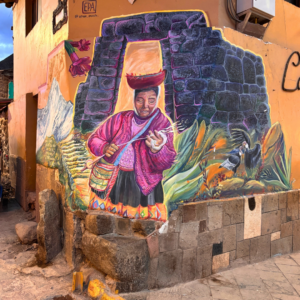
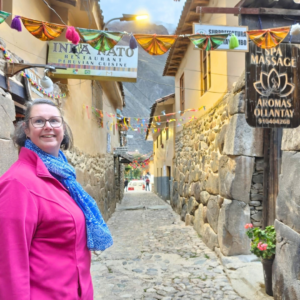
Ollantaytambo still features traditional houses with a type of plaster finish that reminds me of a Swiss mountain village—albeit a sunny one. It has a very cozy, welcoming feel. The entire town is bathed in warm, soft lighting. The atmosphere is delightful, and we could easily have stayed here for a few days. We discover an added bonus in the morning when we spot snow-capped mountain peaks from the breakfast room. We think the town is absolutely beautiful.
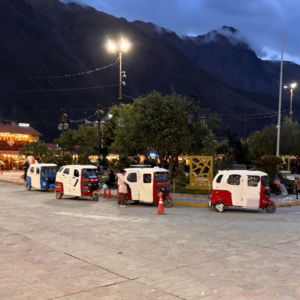
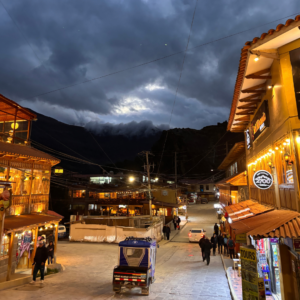
Above, you can see a form of taxi transport: essentially half a moped with a cabin built around it. We come across them everywhere in Peru, and they look very cute.
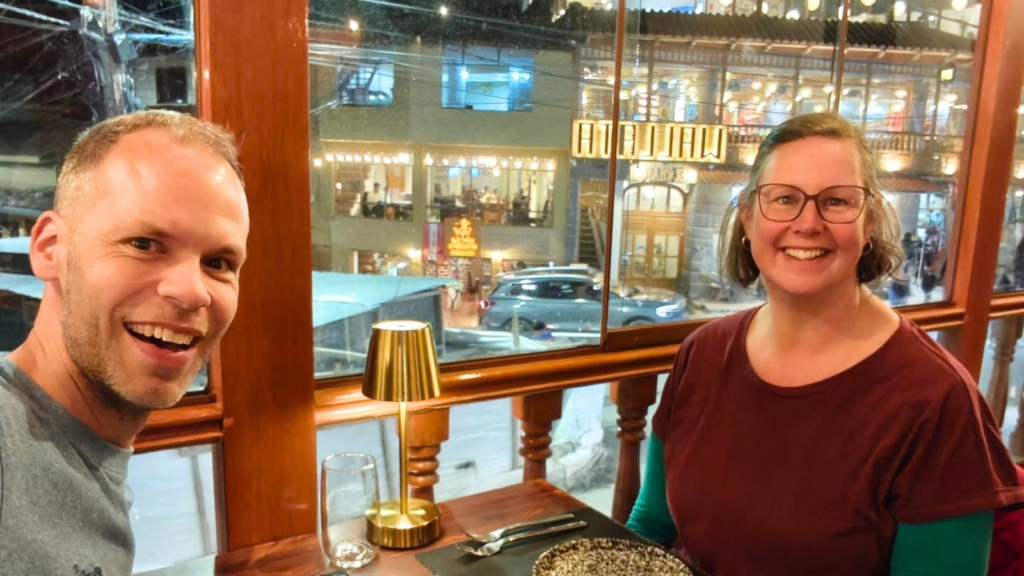
We treat ourselves to a meal at a high-end restaurant, where we taste alpaca meat for the first time; it is tender and slightly rare, lacking the metallic notes of game meats like venison or wild boar, yet possessing more of a ‘wild’ flavor than beef. I also chose a dish featuring a variety of potatoes, allowing Arjan and me to sample 15 different types together. It was a really fun and delicious experience.

Reply