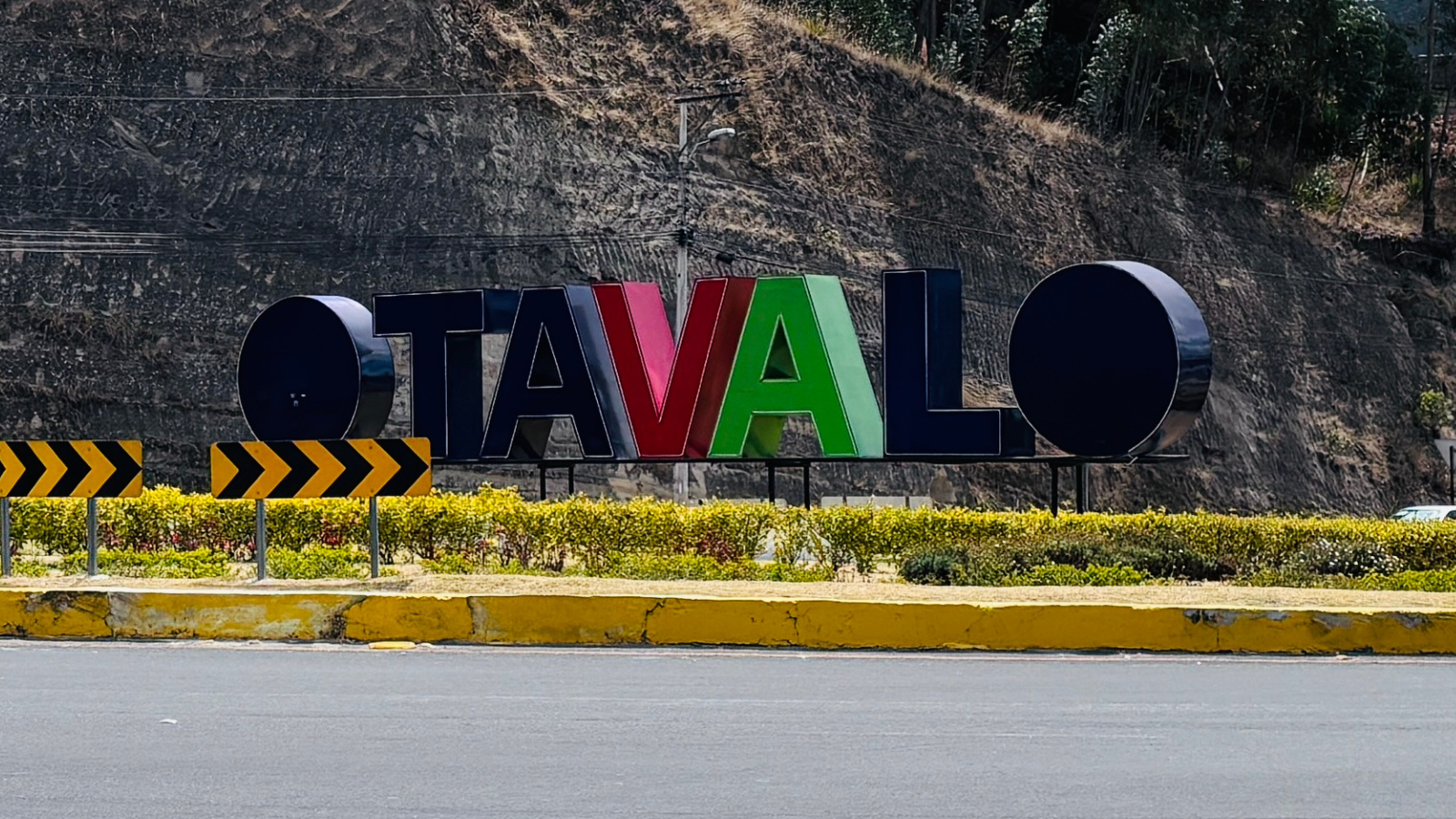
Otavalo is located in northern Ecuador and is the largest textile market in Latin America. On weekdays, there is the ‘regular’ market, and on Saturdays, many people from the region and the mountains come for the big market.

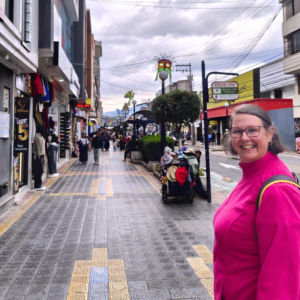
We arrive in Otavalo on Friday and explore the city a little. It is beautiful, with many colonial buildings and squares. I love the thick palm trees we see standing everywhere. And certainly in this city, they have created a colorful whole with the sidewalks and crosswalks. Beautiful colored tiles as sidewalks. And the crosswalks in a kind of mosaic. Lampposts with beautiful ornaments on them. It looks beautiful.

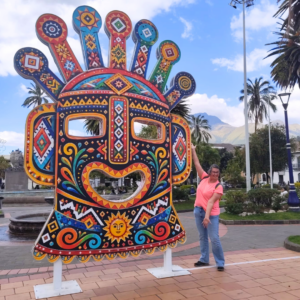


We are spending the night by Lake ‘Lago San Pablo’ in a dome. Just after sunset, the power goes out in the neighborhood. We have a beautiful view of the lake and, from the dome, of the moon.


The people here are dressed more traditionally than in Quito. We see entire families with beautiful long black hair. The men and boys wear long braids, reaching down to or past their buttocks. The women have their beautiful long black hair in a low ponytail with a colorful ribbon, or neatly pinned up at the back of the neck. During our breakfast, we look out onto a gallery where many people walk by.
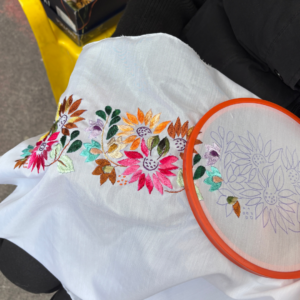
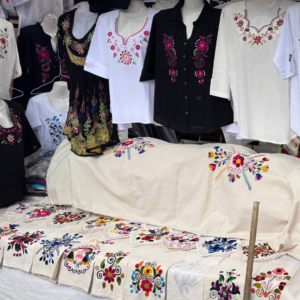
The traditional clothing of the woman consists of a petticoat, with a black overskirt worn over it. A white blouse with embroidery across the chest and sleeves. They wear a money belt often embroidered in the same colors as the blouse. Over that, a black or blue blanket, which they use as a coat. On their arms, they wear rows of red beads. We learn later that this is to ward off the evil eye. On their chests, they wear large, beautiful necklaces and earrings of yellow gold. To meet the god of the sun. Beautiful! Out of respect for the people, we do not take photos. So you will mostly have to make do with my words.



We are sharing a delicious lunch (almuerzo), consisting of very tasty potato soup, red rice with chicken, and fruit. It is a good thing we are sharing this, because it is a lot.


We are already taking a stroll around the ‘small’ market at the end of the day. Impressed by the large square with nothing but stalls full of fabrics. Really a lot of stalls. Curious to see what will be added on Saturday.

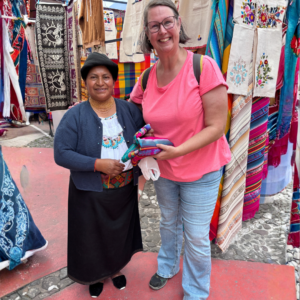
On Saturday, after a nice bus trip, we are back in the city and the market is overwhelming. Vendors have stalls in every street adjacent to the market, four rows in every street. Whereas on Friday we could just walk along the edge of the square, there are now stalls everywhere too. It is so much! There aren’t too many tourists. We see more locals, and every now and then a few people stand out, revealing where a busload of tourists has been ‘unloaded’. We see many beautiful things and sometimes encounter difficult vendors who are just short of pulling at you. When buying some small items, we negotiate the price, and as expected, we are not very good at it. Hahaha, but we are learning, and by the end of the day, we are better at negotiating than at the beginning.


We are learning assertiveness with taxis too. In Costa Rica, we felt ripped off because the price was three times as much as expected at the end of a taxi ride. Now we agree on the fare beforehand. However, the taxi drivers are so cunning that they pretend they don’t have any change in banknotes, hoping that you will round up, for example, 8 dollars to 10 dollars. We have now learned how to say “and have you got change” in paper money in Spanish after agreeing on the price. We haven’t had to put it into practice yet, but we are definitely going to. We are going to learn assertiveness.
Reply